Monday, April 2, 2018

Trabant: The East German Cotton Car

After four years of inactivity, I've decided to revive this blog! 


Trabant in 1985. Photo from Charles01 - Wikipedia.

The Trabant was introduced in East Germany in 1957, and sold for 34 years with few changes. It sold about 3.1 million units, and was the car that put postwar East Germany on wheels. 

To get a Trabant, customers were placed on a waiting list; the closer to Berlin, the sooner you would get your car. Long waits were common, sometimes over a decade, for a customer to receive their Trabant. 

The Trabant was offered with three engines during its production run. At introduction, it was equipped with a 500 cc two-stroke engine that made 18 horsepower. In 1962, the displacement was bumped up to 600 cc, now producing 23 horsepower, which was used until the end of production in 1991. From 1990-1991, the Trabant offered an optional 1100 cc, 45 horsepower engine from a Volkswagen Polo. On all models except the 1100, oil had to be mixed with the gasoline when refueling.

Perhaps the most unique aspect of the Trabant is its body. The Trabant was built on a traditional steel frame, but the body was made of Duroplast - a material made largely from recycled Soviet cotton waste.

The Trabants were durable - their average life expectancy was 28 years - but it became clear that after German re-unification in 1989, no one wanted the Trabant. They were discarded in massive numbers, and production ended in 1991. 

Tuesday, May 13, 2014

The GM EV1: Electricity for the Masses?


 Photo by Rick Rowen (RightBrainPhotography of Flickr)
Gas is expensive, as anyone who's driven recently can attest. The idea of a vehicle that doesn't use gas is a good one, and has been tried for many years. Many of the first vehicles on the road were electrically powered, but ultimately, gas powered designs won the battle. Electrics made a comeback beginning in the 1970s, first as aftermarket conversions and vehicles built by small start-up companies.

By the 1990s, the technology had reached a point that a major automaker was willing to try its hand in the electric car business. Following positive reception of their 1990 Impact concept car, fifty hand built Impact vehicles were leased to consumers in 1994 for a period of one to two weeks.

Following the positive reception to the Impact, the California Air Resources Board set requirements for emission free vehicles that the seven largest car makers in the US would have to follow to sell cars in California. 2% of cars would have to be emission free by 1998, 5% by 2001, and 10% by 2003.

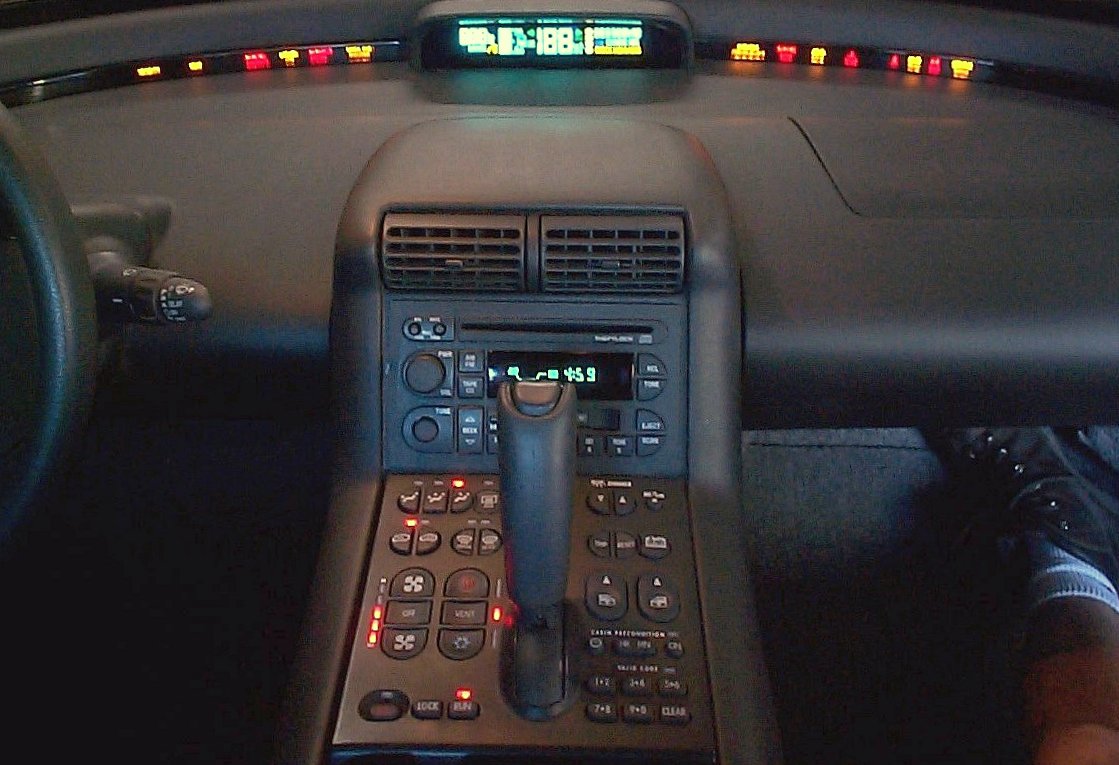
Although the mandate was later rescinded, GM developed the Impact into the EV1 and released it to great grandeur on December 5, 1996. The EV1 featured a lead acid battery system producing 137 horsepower.

The cars were lease-only: GM specifically disallowed purchase of the cars, which were valued at $34,000. The cars' success was further hampered by General Motors only allowing certain people to become lessees of the EV1. Hundreds of people wanted to become EV1 lessees, but GM wouldn't let them. Only 288 were sold the first year.

After 660 examples had been built, GM released a second generation EV1 in December 1999, featuring a new nickel-metal-hydride battery system that was more reliable and cost-effective. 457 of these were leased over the next eight months.

This is a story with a sad ending. On February 7, 2002, two years after the end of EV1 production, GM notified lessees that EV1s would be removed from the road. Despite numerous efforts to keep the cars on the road, GM did not extend leases and forcibly repossessed the cars. They even had police guard transport of the cars to their crush sites. Almost every EV1 was crushed; a few were donated to colleges with their powertrains deactivated, one was donated to Epcot, and one was donated to the Smithsonian. None are operational today.

Luckily, GM got their head out of their butt with the Volt, which is sold directly to consumers.

Friday, May 9, 2014

The EDSEL


Ask someone what car comes to mind when you say "flop", and Ford's ill-fated Edsel is one of the most likely answers they'll give you. The last Edsel rolled off the assembly line nearly 55 years ago, but the memory of the Edsel - and its dramatic failure - are remembered today, as are many of its unusual design features.

The Edsel launched on September 4, 1957, and even had a TV show broadcast October 13 of that year on CBS to drum up interest. The show, which replaced The Ed Sullivan Show (for the uninitiated, one of the most popular 1950s television shows) for the night, was highly rated and helped to launch Bing Crosby's television career.

The car launched well, but sales quickly went south. The build quality was poor, as illustrated by a door handle actually breaking off in Rosemary Clooney's hand on the Edsel Show. By March 1958, 16% of Edsel owners had complained of shoddy workmanship. There was no "Edsel" plant - cars were built by Ford and Mercury plants, who often found it burdensome to switch tooling to produce the occasional Edsel that rolled down the line.

People didn't know where the Edsel fit into Ford's lineup. At the time, Ford had a stairstep structure - Ford - Mercury - Lincoln - differentiated by price and feature content. Edsels were priced closely with Mercury, making the Edsel redundant in Ford's lineup. Exacerbating this problem was the fact that there was a recession in progress upon the car's introduction, and sales of the "medium priced cars" - the Mercury's price range - were down as consumers favored lower cost options.

Finally, the Edsel was an oddity, in more ways than one. The 410 cubic inch V8 lacked distinct combustion chambers, which was a new idea at the time. The "Teletouch" transmission used buttons located on the steering wheel as opposed to a gear shift, so drivers found it difficult to get used to. The transmission was also known for suffering mechanical problems. The styling, headed by the controversial vertical grille (derisively referred to as a "toilet seat", "horse collar", or various other, less G-rated names) was poorly received from the get go.

Only 68,045 units were sold in 1958, the Edsel's debut year. This number declined to 47,396 for 1959.

The Edsel's discontinuation was announced on November 19, 1959, and production ended later that month with only 2,846 cars being built.

See the Audio Review here: https://soundcloud.com/carsthatareunusual/edsel-12-05-14


Tuesday, May 6, 2014

The Subaru 360


A little known fact is that Subaru is a division of Fuji Heavy Industries, a Japanese multinational transportation company. In 1958, Subaru began production on their first widely popular car, the 360, so named for the 356 cc engine. Japan was becoming crowded in the wake of rapid industrialization after WWII, so in 1955 the Japanese government created a new car class, "kei jidosha" (colloquially known as "kei car") which set limits on width and engine displacement. The engine displacement limit for a kei car at that time was 360 cc.
While the economical design was perfect for a Japan just becoming motorized, it didn't go over well when Malcolm Bricklin brought it stateside in 1968. By this time, the design was ten years old, and it would have been outclassed even had it been introduced in the USA at the same time as its Japanese introduction. 
It weighed 993 pounds; safety standards of the time only applied to vehicles weighing over 1,000 pounds. The little car made no pretense of following many of the safety standards. It was lucky even to have seat belts. The fuel economy was found to be approximately equal to the Volkswagen Beetle, then  the USA's number one selling imported car. The price, at $1,297, was cheap, but only a few hundred dollars cheaper than the Beetle. 
In the end, only 10,000 were sold in the USA before the car was discontinued in 1971. Though it was a flop, later Subarus sold much better. Today's Subarus have won many awards and the company is very successful.

Listen to the Audio Review at https://soundcloud.com/carsthatareunusual/subaru-podcast-11-05-14

The Saturn


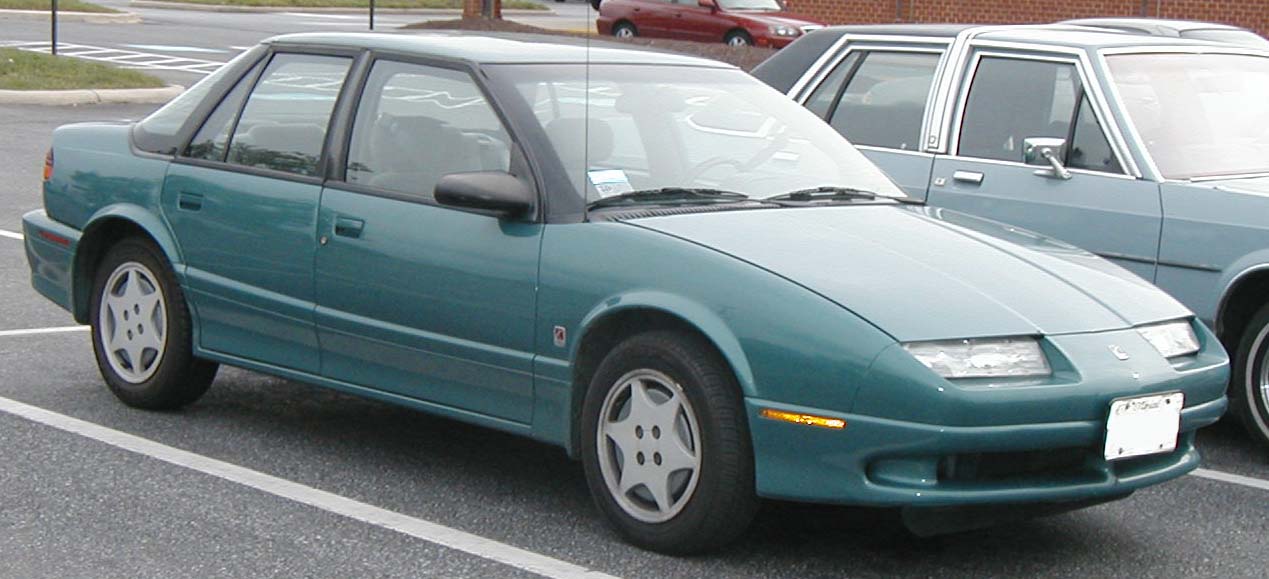
In the 1980s, Toyota, Honda, Nissan, and other foreign makers found success with small, fuel efficient cars. GM, finding itself short on small cars, introduced two new brands dedicated solely to the compacts. The first, Geo, founded in 1988, sold cars from Japanese companies, license built by GM. The second, Saturn, founded in 1990, used a dedicated design called the "Z-body", a 1.9 liter engine custom developed for the car, and a space frame design with plastic body panels. The division of GM had considerable autonomy, and emphasized quality - it was billed as "a different kind of car company."

While Geo didn't survive the 1990s, the Saturn - offered in sedan, coupe, and wagon guises - was very successful in the 1990s.

Monday, May 5, 2014

Sterling 825: Not Quite Sterling


On the day after Christmas 1979, British Leyland, then the megalith that owned nearly all British car production, entered into an alliance with Honda. It had a potential to benefit them, as British Leyland quality of the time was shoddy, and the company was losing money.

Fast forward to 1986. Honda has launched a luxury division, known as Acura. Their premier offering was the Legend, a large luxury sedan. Austin Rover, one of British Leyland's successors, also built their version, which was called the 825. The Sterling 825 shared a platform with the Legend, but was tuned for a "sportier" feel.

The Sterling's sales were initially strong, but wore off quickly after the vehicles demonstrated poor reliability. While the basic engine and running gear design was sound - they had been developed by Honda - problems with trim, electronics, and rust sent the vehicles to the bottom of the J.D. Power rankings. The Legend went to the top of the same rankings.

The Sterling was also sold in Europe as the Rover 800, where it found more success and was made until 1999. Quality on the 800s improved over time, with later models suffering from much fewer problems as early models.

In the US, the Sterling was discontinued in August 1991. The Acura Legend evolved into the RL, and then the RLX. Nearly 30 years after its forefather's introduction, the RLX is sold new to this day.