Wednesday, October 9, 2019

Update Post: The Acura ZDX, Test-Driven (+ face reveal)

Since this blog was created, it's been on my bucket list to test drive a car featured in one of the original cycle of posts from early 2014 (and preferably not one of the "common" ones like the Saturn, Smart, or Mercedes CLS, but something rarer). Being in Tennessee, that was easier for some cars than others. Many were only sold in foreign markets. Many are not just rare, but EXTREMELY rare. Many are very old and/or unsafe, meaning they would be more difficult to drive and most would have disappeared from use due to attrition. A big shout-out to Gary Force Acura in Brentwood, TN, for letting me come down and test drive this ZDX, which was the first ZDX they had gotten in at least four years (and Gary Force is a sizable dealership, the only one in the Nashville area, and there are no others in a 100 mile radius). I saw this one on CarGurus just after midnight, and set up a test drive as soon as possible: the actual test drive started around 1:25 pm that same day, July 15, 2019. That's me in the green "W" shirt.

Here is the ZDX's original post from February 4, 2014. It's worth a read alongside this one.

With only 7,191 made from 2009 to 2013, the Acura ZDX could definitely be considered "rare". Torque News said in 2015 that it's "destined to be a collector car". It was definitely a niche vehicle: sort of a cross between a sports coupe and an SUV. It sat near the top of Acura's lineup during its production, starting at $45,495 in 2010 (compared to the MDX SUV at $42,230 and the RL luxury sedan at $46,830). Its design is striking, with flush rear door handles to complete the coupelike look. You'll definitely notice this one in a crowded parking lot.

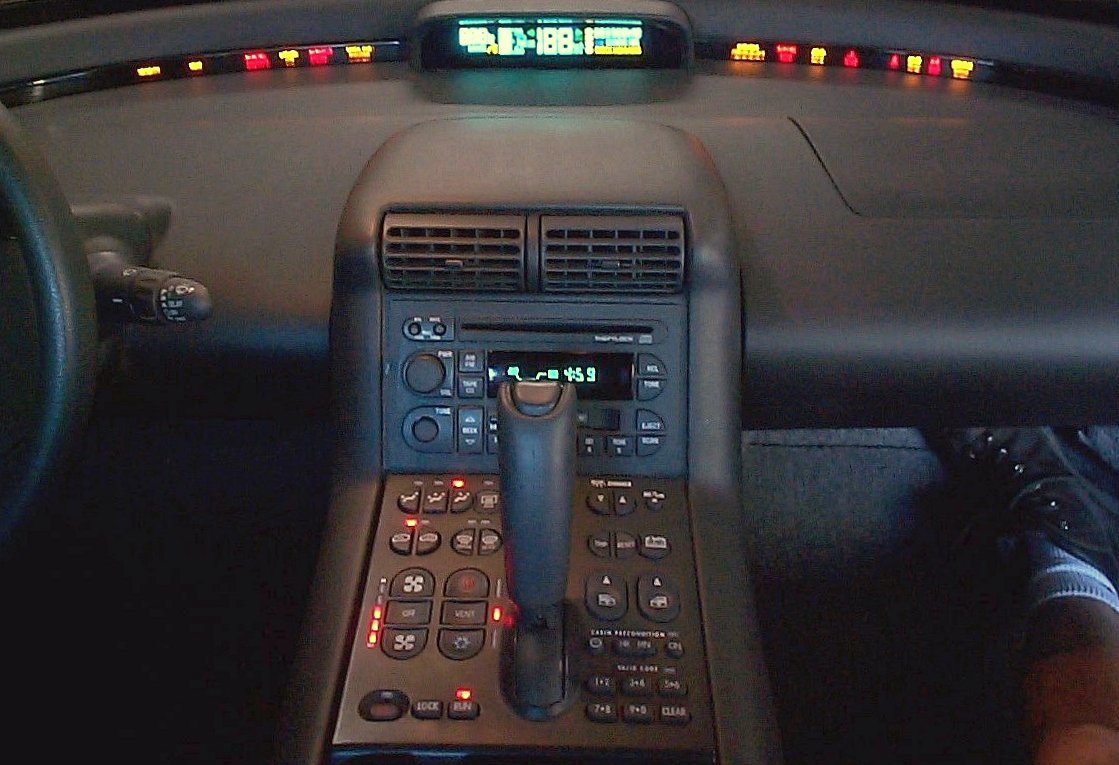
The ZDX shares a platform with the Honda Pilot and Acura MDX, but the interior is largely the same as a fully loaded TL of the same vintage; button-filled and high tech, but easy to use. It drives as good as any Acura sedan of the era and doesn't feel like the 4,458 lbs that it weighs. The seats are quite comfortable, and the driving position is good. Despite the coupe-like roof line, I still felt like I had plenty of room, and I'm 6' tall. Also, the one I drove had about 170,000 miles and still drove like it was brand new.

My post in 2014 was right: the ZDX is a thoroughly unique car that's easy to live with. The only issues are visibility, which isn't great from the rear; however, all ZDX's come with a rear view camera, and a blind spot information system is optional.

Sunday, September 1, 2019

The Coda Electric Car

Coda Electric Car, from here. Photo by Mario Roberto Duran Ortiz, licensed under the Creative Commons Attribution-Share Alike 3.0 Unported license.

Despite the fact that this car looks straight out of 1999, the Coda electric car was produced in 2012-2013 and competed with the Chevy Volt and Nissan Leaf. "Competed" is used loosely here, as only 117 Codas were sold. Even though the Coda was sold only in California, this is still, to put it lightly, a dismal number. Codas were $38,145; the Volt started at $39,145 and the Leaf $35,200.

As its looks suggest, the Coda was built off of outdated bones. It used the body of the Hafei Saibao, a Chinese car built from 2005-2008 which was loosely based on the 1997-2001 Mitsubishi Mirage design. Coda did modify the design to improve safety, but it was still largely a 7 year old design with 16 year old underpinnings. The Volt, on the other hand, shared its platform and much of its design with the Cruze, a well-reviewed, thoroughly up-to-date small car that came out for the 2011 model year alongside the Volt. The Leaf was an all-new platform also introduced for the 2011 model year, and looked and drove like something from 2011 as well.

Speaking of safety, the Coda only received a 2 star front-impact driver crash test rating from NHTSA (out of 5 stars). It got 4 stars for the front passenger in the same front impact and 5 stars for both front and rear occupants in the side impact, although there were still problems: the side curtain airbag did not fully deploy in the side impact, allowing the rear passenger dummy's head to hit the window, and the Coda only got 3 stars in the "side pole" crash test. The Volt? All 5-star except for the front-impact front passenger, which was still 4 stars. The Leaf had 4 stars for both occupants in the front impact, a 5 star safety rating, and 4 stars in the side pole crash test/ In addition, they both had an IIHS Top Safety Pick rating; the Coda was never tested by IIHS.

Car and Driver said that the Coda "incorporated all the charm of a late-’90s Daewoo Nubira for the price of a well-equipped Audi A4.", pointing out that the Coda had no cruise control or auto up-and-down power windows. 

Wow. 

Wednesday, February 13, 2019

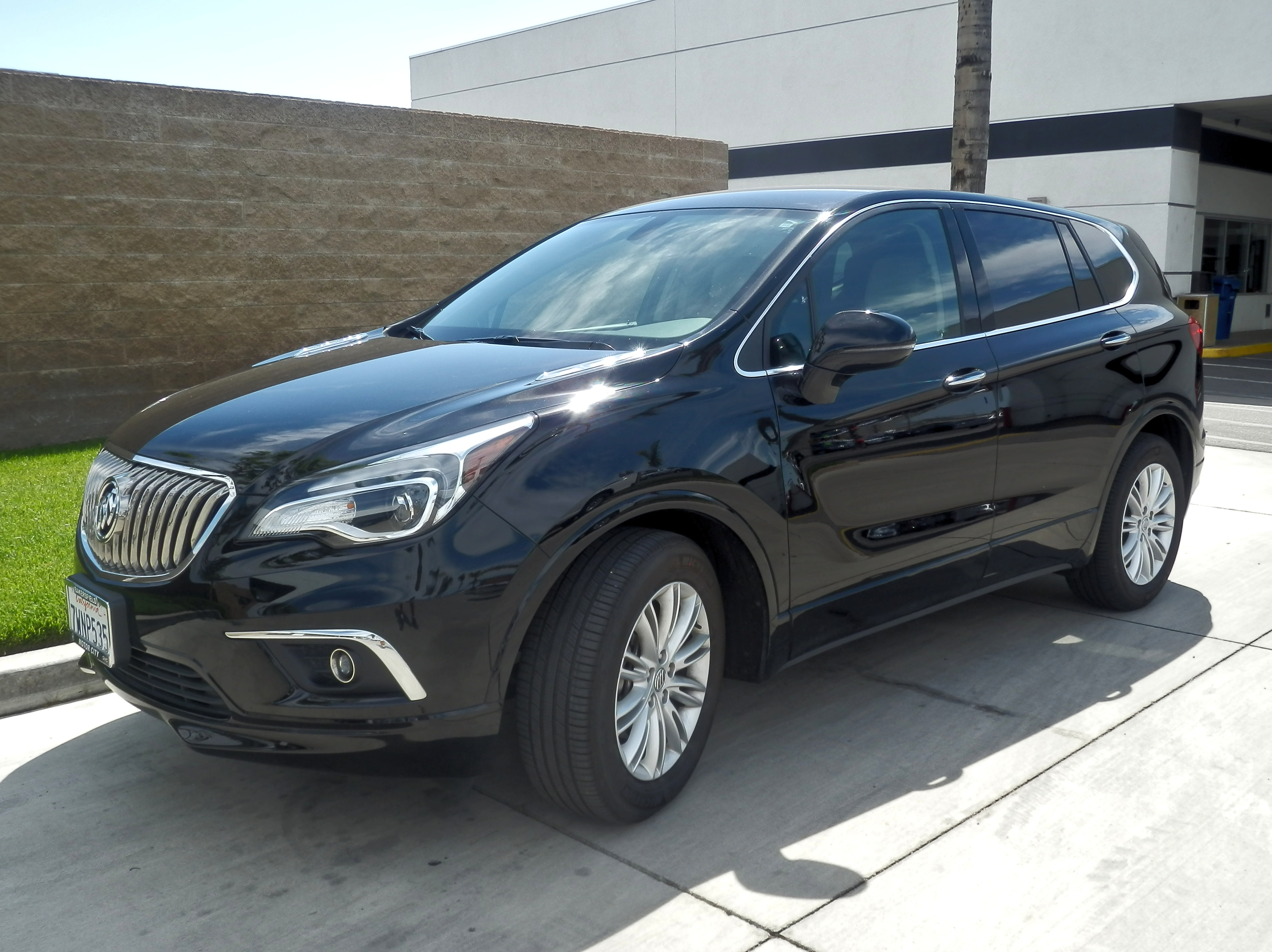
The Buick Envision: A Chinese SUV in the USA

Buick Envision. Photo by Alexander Migl.

Back in the 2000s, there was widespread talk of Chinese-built vehicles entering the USA market. The Chinese economy was growing rapidly, and a large middle class was emerging there, causing car sales and production to skyrocket. As late as 1985, only 5,200 cars were built in China. By 2008, China was the number-one country for automobile production in the world. Chinese cars were exported to most of the world, with the United States being one of the main holdouts. Safety was a big concern; many Chinese cars then were known for folding up like tissue paper in crashes. The Landwind, Brilliance BS6, and Chery Amulet were three well-known examples whose crash tests were seen around the world.

Times have changed. Chinese cars of today are much better in quality than they were a decade ago. Today, over a third of cars in the world are built in China, a total of over 24 million. Four models sold in the United States are built or have been recently built in China. The Buick Envision and Volvo S90 are exclusively imported from China. The Cadillac CT6 plug-in hybrid is built in China, but the standard variant is still built in Hamtramck, Michigan. The Volvo S60 Inscription was previously built in China, but since late 2018 all S60 variants have been built in South Carolina. 

Of these four models, the Envision was the first to launch and is by far the best-seller. It is a compact premium crossover SUV that starts around $32,000. Reviews have been good, but worse than many vehicles in its class. Sales have been around 30 to 40 thousand per year.

Why a Buick? Believe it or not, Buick has been a very prestigious brand in China for over a century. Today, about 80 percent of Buicks sold in the world are sold in China. 

Saturday, February 9, 2019

The Battronics Van - Made for 20 years, less than one a month

A 1977 Battronics van, from NHTSA crash test footage, October 1979

Following the gas crisis of 1973, there was a bit of an electric vehicle fad. Gas prices remained elevated from 1973 to about 1981, peaking around 1979-1980 during the second gas crisis. As such, from about 1975 to 1983, electric vehicles experienced a surge in popularity. While their sales figures remained minuscule compared to gas vehicles, there were a wide range of electric vehicles available during this period - most of which were hasty conversions of already existing gas-powered vehicles. Vehicles such as the Ford Escort, Ford Fairmont, Renault LeCar, Dodge full-size pickup, and many others were given electric conversions. Given their limited market penetration, these vehicles in themselves could be considered somewhat unusual. 

The Battronic electric van, however, was a true oddball. It's perhaps best known today for a 1979 crash test conducted by the federal government in which the entire body came off of the frame. But horrifying safety, even by the standards of the late 1970s, is only a small part of this van's story.

The company that designed the Battronics van, Smith Electric Vehicles, was founded in 1920 in England. At that time, the automotive industry was still in a relatively early stage, and there were two schools of thought on what should power a vehicle: petroleum-based fuel or electricity. (As we all know, petroleum-based fuel won out, at least for the next century or so). Smith built electric vans, buses, trams, and delivery vehicles. In 1962, looking to enter the United States market, they formed a partnership with Boyertown, a coachbuilder from Boyertown, PA, and Exide Batteries, forming a company called the Battronic Truck Corporation. Their only product was this van. 

Production started in 1963. Smith withdrew from the partnership in 1966, but this van continued in production until 1983. Even though it was made for 20 years, less than 200 were produced. 

The van could go from 0 to 30 mph in 11 seconds and was capable of carrying 800 pounds of cargo.

Wednesday, February 6, 2019

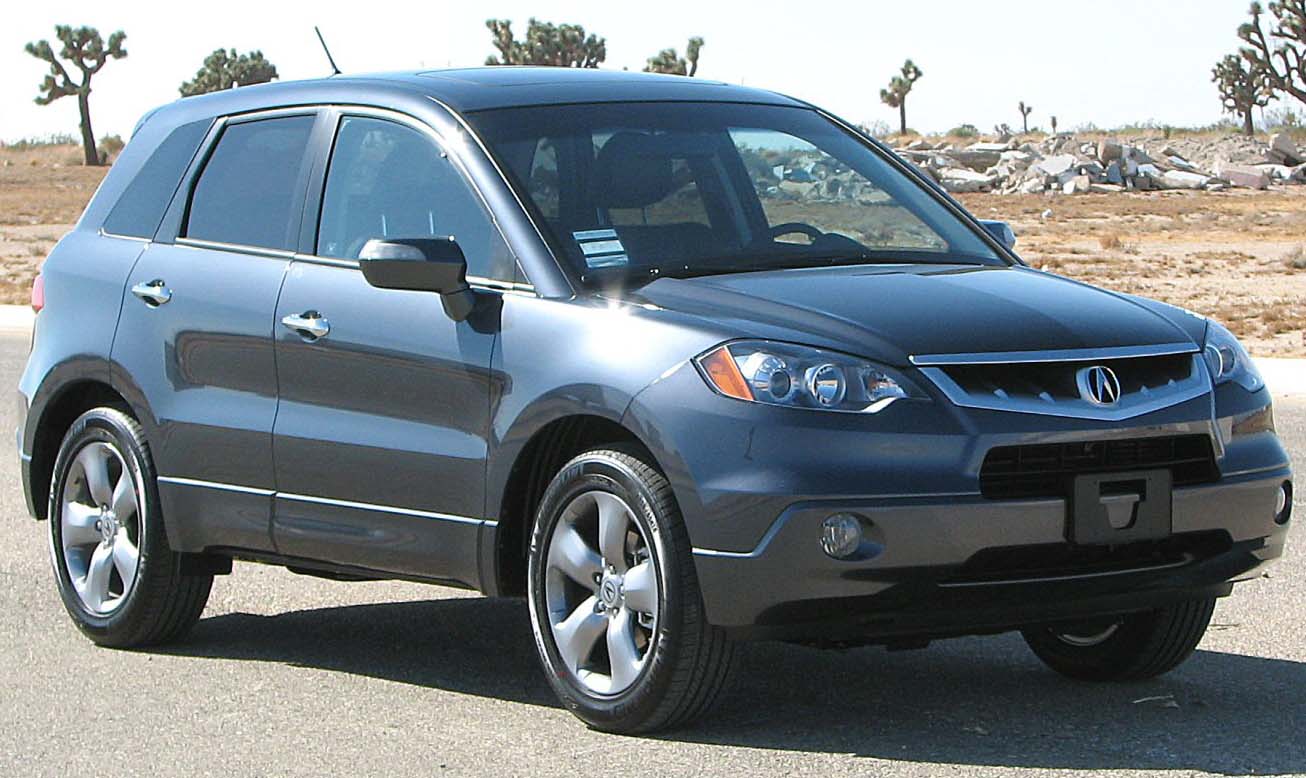
The first-generation Acura RDX: The Shape of Things To Come


The first generation Acura RDX isn't a 10 on the unusual scale - it is a recent vehicle (sold new from August 11, 2006 to early 2012), sold by a major automaker, in a a traditional form factor. I've even ridden in one. What makes the RDX unusual is its turbocharged four-cylinder engine and status as a pioneering compact luxury SUV. 

At the time of the RDX's introduction, turbocharging was relatively rare outside of sports cars; in the 2010s, many mainstream vehicles began to use smaller-displacement engines with turbos in an effort to improve fuel economy. 

The RDX was also the second compact-sized luxury SUV introduced, following the BMW X3 by three years. At the time of the RDX's introduction, there were plenty of compact crossover SUVs - including Honda's own CR-V, which donated its platform to the RDX - and the Toyota RAV4, Jeep Liberty, Ford Escape, and Kia Sportage, to name a few. Following the RDX's introduction, Audi, Infiniti, Volvo, and Mercedes introduced their own luxury compact SUVs by the end of 2009.

Sounds like a formula for success. Honda's CR-V sold over 170,000 units in '06. The RDX was just as well-reviewed as its rivals. But sales weren't very good. The RDX sold 23,356 units in its first full year - 2007 - and less than 16,000 each year from 2008 to 2011. During this period, the CR-V hovered around 200,000. 

The main reason the first-gen RDX didn't sell well was the market. There just wasn't much of a market for luxury compact SUVs in the late 2000s and very early 2010s. Taking 2010 sales figures vs. 2018 sales figures:
BMW X3: 6,075 in 2010, 61,351 in 2018 (10.10x increase)
Audi Q5: 23,518 in 2010, 69,978 in 2018 (2.98x increase)
Infiniti EX35/QX50: 8,312 in 2010, 25,389 in 2018 (3.05x increase)
Volvo XC60: 12,031 in 2010, 32,689 in 2018 (2.71x increase)
Mercedes GLK/GLC: 20,946 in 2010, est. 87,728 in 2018 (4.19x increase)

The RDX, meanwhile, sold 14,975 units in 2010 and 63,580 units in 2018, an increase of 4.24 times.

The first-gen RDX was replaced with a more conventional design that included a non-turbo engine in spring 2012. Sales jumped from 15,196 in 2011 to 44,750 in 2013. But the new RDX, launched on June 1, 2018, includes a turbocharged engine, and sales are better than ever.

Monday, April 2, 2018

Trabant: The East German Cotton Car

After four years of inactivity, I've decided to revive this blog! 


Trabant in 1985. Photo from Charles01 - Wikipedia.

The Trabant was introduced in East Germany in 1957, and sold for 34 years with few changes. It sold about 3.1 million units, and was the car that put postwar East Germany on wheels. 

To get a Trabant, customers were placed on a waiting list; the closer to Berlin, the sooner you would get your car. Long waits were common, sometimes over a decade, for a customer to receive their Trabant. 

The Trabant was offered with three engines during its production run. At introduction, it was equipped with a 500 cc two-stroke engine that made 18 horsepower. In 1962, the displacement was bumped up to 600 cc, now producing 23 horsepower, which was used until the end of production in 1991. From 1990-1991, the Trabant offered an optional 1100 cc, 45 horsepower engine from a Volkswagen Polo. On all models except the 1100, oil had to be mixed with the gasoline when refueling.

Perhaps the most unique aspect of the Trabant is its body. The Trabant was built on a traditional steel frame, but the body was made of Duroplast - a material made largely from recycled Soviet cotton waste.

The Trabants were durable - their average life expectancy was 28 years - but it became clear that after German re-unification in 1989, no one wanted the Trabant. They were discarded in massive numbers, and production ended in 1991. 

Tuesday, May 13, 2014

The GM EV1: Electricity for the Masses?


 Photo by Rick Rowen (RightBrainPhotography of Flickr)
Gas is expensive, as anyone who's driven recently can attest. The idea of a vehicle that doesn't use gas is a good one, and has been tried for many years. Many of the first vehicles on the road were electrically powered, but ultimately, gas powered designs won the battle. Electrics made a comeback beginning in the 1970s, first as aftermarket conversions and vehicles built by small start-up companies.

By the 1990s, the technology had reached a point that a major automaker was willing to try its hand in the electric car business. Following positive reception of their 1990 Impact concept car, fifty hand built Impact vehicles were leased to consumers in 1994 for a period of one to two weeks.

Following the positive reception to the Impact, the California Air Resources Board set requirements for emission free vehicles that the seven largest car makers in the US would have to follow to sell cars in California. 2% of cars would have to be emission free by 1998, 5% by 2001, and 10% by 2003.

Although the mandate was later rescinded, GM developed the Impact into the EV1 and released it to great grandeur on December 5, 1996. The EV1 featured a lead acid battery system producing 137 horsepower.

The cars were lease-only: GM specifically disallowed purchase of the cars, which were valued at $34,000. The cars' success was further hampered by General Motors only allowing certain people to become lessees of the EV1. Hundreds of people wanted to become EV1 lessees, but GM wouldn't let them. Only 288 were sold the first year.

After 660 examples had been built, GM released a second generation EV1 in December 1999, featuring a new nickel-metal-hydride battery system that was more reliable and cost-effective. 457 of these were leased over the next eight months.

This is a story with a sad ending. On February 7, 2002, two years after the end of EV1 production, GM notified lessees that EV1s would be removed from the road. Despite numerous efforts to keep the cars on the road, GM did not extend leases and forcibly repossessed the cars. They even had police guard transport of the cars to their crush sites. Almost every EV1 was crushed; a few were donated to colleges with their powertrains deactivated, one was donated to Epcot, and one was donated to the Smithsonian. None are operational today.

Luckily, GM got their head out of their butt with the Volt, which is sold directly to consumers.